
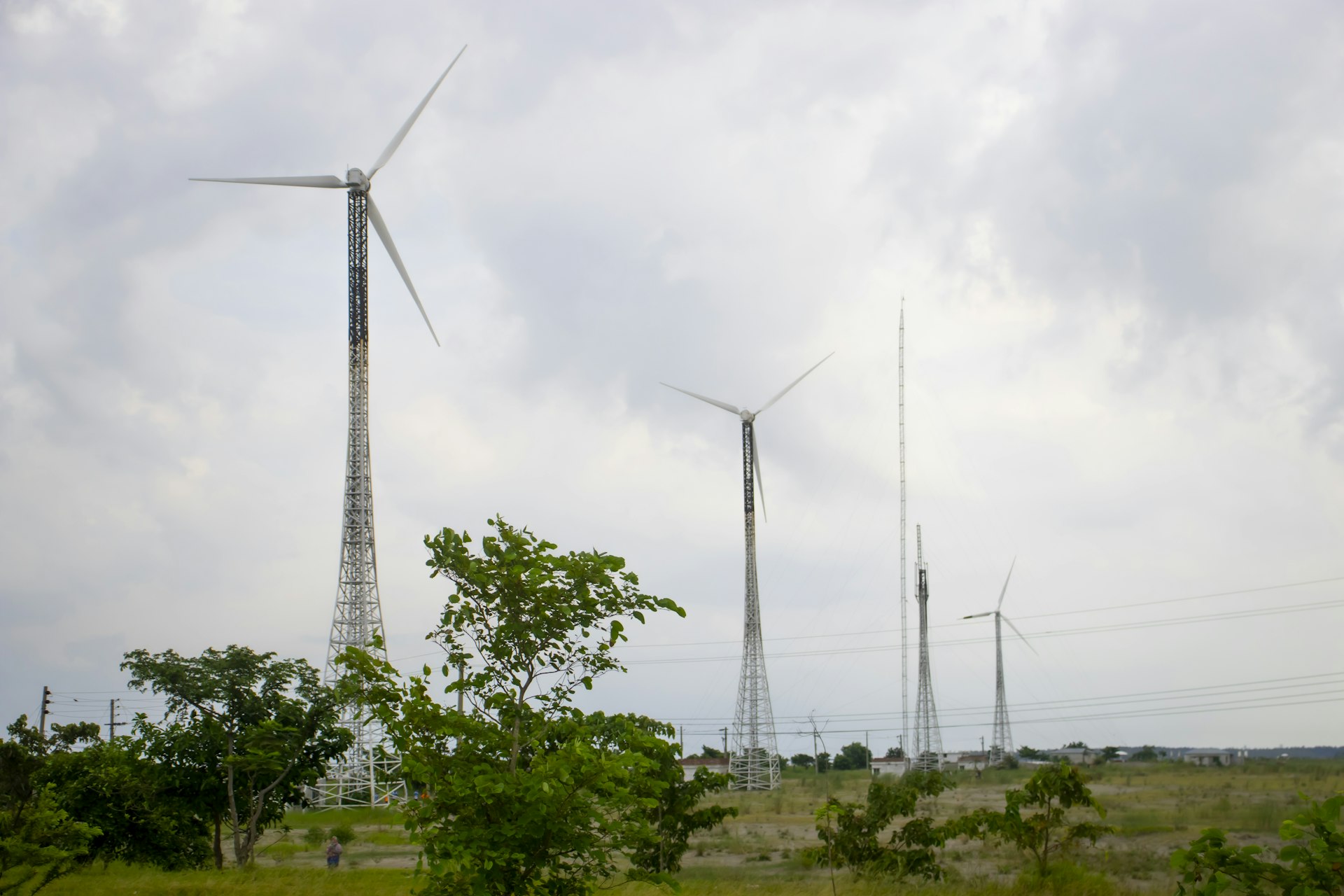
The heavy-lift quay at the Offshore Wind Port Terminal, a 30-acre port we are delivering as EPC contractor for a confidential owner, is complete. The quay wall is built, the heavy-lift pads have passed their proof loads and the laydown yard behind them is being paved and wired. The terminal now moves toward the work that makes it a port instead of a seawall: power, lighting, networks and the systems that will run it when the first turbine components arrive.
Built for loads that weigh more than buildings
An offshore wind port handles cargo most ports never see. A single turbine blade is longer than a football field. A foundation can weigh more than a mid-rise building. The cranes that lift them put enormous point loads into the ground, and the ground has to take them without settling, season after season.
So most of this job is below grade. Our crews drove the combi-wall that forms the quay face, installed the anchors that tie it back, and improved the soil behind it so the yard can carry concentrated crane and transporter loads. Each heavy-lift pad was then proof-loaded and surveyed before it counted as done. Problems were fixed in the bay where they were found, not saved for a punch list at the end.
The part nobody sees: power and data
A modern terminal is only as smart as the network that runs it. Yard lighting, cameras, access control at every gate, shore power for the vessels and the systems that track every component in the yard all run on the same backbone. Our team is building and testing that fiber network and the security systems the same way we build the structure: every run labeled, every termination certified, every device verified at the other end of the cable before it counts as done.
What comes next
Over the coming months our team, working with the owner and its operators, will:
- Finish paving and drainage across the laydown yard in sequenced blocks.
- Energize yard power, high-mast lighting and shore power for vessels at berth.
- Commission cameras, access control and the terminal network end to end.
- Run load and operations trials with the owner's crane and transport teams.
- Hand over the documentation and training the owner needs to open the terminal.
The quay is the part people see from the water. The part that makes it work is a few hundred feet of ground that will not move under a load the size of a building.
Project manager, Tum Harry
Built on open water
The site brought its own conditions: wind, tides, salt air and work fronts that run along the water. Crews worked to tide and weather windows, and our logistics plan kept marine equipment, piling deliveries and paving crews moving across a large footprint without slowing production.
We thank the owner, the design team, our trade partners and every craft professional on the project. We look forward to handing over a port that keeps clean power moving out to sea.